Cychlorphine and Metedoinide:
The Latest Reminders That the Drug Supply Is Constantly Changing
My overall message is simple:
The street drug market is increasingly unpredictable, and neither legality nor familiarity guarantees safety.
Before I begin, a disclaimer: I've done my best to provide the most current information available, but when it comes to emerging drugs, the science is often trying to catch up with a rapidly changing drug supply.
Many of you know that I give an educational workshop called Gas Station Drugs, Emerging Threats in Addiction and Public Health, which looks at unregulated and emerging psychoactive substances sold at gas stations, vape shops, smoke shops, and online. The substances I'm talking about today aren’t usually sold in those places, at least not yet.
But I have found it important to include substances like Chloraphine, Nitazene, Metandomine in the workshop because the overall concern is very much the same - when you buy an unregulated substance, whether online, in a smokeshop, or on the street, there is no way of knowing just what substances/ingredients are in the product you are buying.
The situation is serious. Both street drugs and unregulated substances are following the same troubling path: a constantly shifting market filled with mood-altering chemicals that’s getting harder to track and even more difficult to manage.
“Most people are not seeking out these substances. In many cases, they unknowingly consume them because these substances have been mixed into other drugs, counterfeit pills, or illicit substances to increase potency, prolong effects, or enhance profitability.”
Cychlorphine
To be completely honest, I had not heard of cychlorphine until shortly after presenting workshops at the West Coast Symposium on Addictive Disorders in May. Initially, I was embarrassed by that fact. Then I realized it perfectly illustrates the challenge facing healthcare professionals today: new substances are appearing so rapidly that awareness often falls behind reality.
According to reports, cychlorphine first appeared in illegal drug markets around 2024 and has been increasingly detected in toxicology reports and overdose investigations throughout 2025 and 2026.
Cychlorphine acts on mu-opioid receptors in the brain. These receptors help regulate pain, reward, and breathing. It is a synthetic opioid in the New Synthetic Opioids (NSOs) class. These laboratory-created compounds are structurally unique from fentanyl and other opioids but can produce similar or even stronger effects.
Its effects may include:
Euphoria
Pain relief
Sedation
Respiratory depression
Fatal overdose
What makes cychlorphine most concerning is its potency. Preliminary estimates suggest it may be significantly more potent than fentanyl, which is already estimated to be 50 to 100 times more potent than heroin. The main public health concern is that many individuals may unknowingly be exposed to counterfeit pills or substances sold as something else. Detection poses another challenge, as many standard drug screens do not routinely test for cychlorphine. Consequently, overdoses and deaths may be undercounted because the substance is never identified, and overdose deaths are attributed to other substances.
Medetomidine: A Veterinary Sedative
The second substance receiving increased attention is medetomidine. Like xylazine, medetomidine is an alpha-2 agonist (meaning it acts on receptors in the nervous system that reduce alertness and slow certain bodily functions) and is a veterinary sedative used in large animals such as horses and cows for sedation, anesthesia, and pain management. It is not approved for human use. Recently, however, medetomidine has begun appearing in fentanyl samples, polysubstance mixtures, and overdose deaths.
This generates concerns about:
Deeper sedation
Greater respiratory risk
More complicated overdose responses
“Most importantly, medetomidine is not an opioid. This means that naloxone (Narcan) does not reverse medetomidine itself in the event of an overdose. However, naloxone should still be administered during a suspected overdose because opioids such as fentanyl are frequently present as well.”
The Bigger Picture
Although cychlorphine and medetomidine are very different substances, they highlight the same troubling reality… The illicit drug supply is changing constantly and rapidly.
A few years ago, many professionals were trying to understand fentanyl. Today, we are discussing nitazenes, cychlorphine, xylazine, and medetomidine. Tomorrow, it will likely be something else.
This is the typical pattern in the illegal drug trade. Chemists alter molecules, create new compounds, and push them into the market faster than public awareness, regulations, and testing systems can keep up.
In many ways, drug manufacturers have the upper hand in this battle. They understand that once a substance gains widespread attention or is scheduled by regulatory agencies, its lifespan may be limited. As a result, they are constantly looking for ways to stay one step ahead.
Sometimes the changes are big. Other times, they involve only slight modifications to a chemical structure, just enough to create a "new" substance that may not yet be specifically banned, routinely tested for, or recognized by healthcare professionals.
By the time researchers begin studying a new drug, toxicology laboratories have developed testing methods, public health agencies have issued alerts - another substance may already be hitting the streets.
This often leads to a constant game of catch-up. Public awareness tends to fall behind what’s actually being sold and marketed on the streets. Healthcare professionals encounter substances they've never seen before. Families don’t recognize the names. Standard drug tests and toxicology reports might even miss them. Tragically, overdose figures underestimate their real impact because they’re not being identified yet.
What Does an Opioid Overdose Look Like?
Someone experiencing an opioid overdose may:
Be unconscious or unable to wake up
Have very slow, shallow, or stopped breathing
Make gurgling, choking, snoring, or "death rattle" sounds
Have pinpoint pupils
Appear limp or unresponsive
Have pale, gray, or bluish skin
Develop blue or purple lips and fingernails
Fail to respond to shouting, shaking, or a sternum rub
Medetomidine Overdose: What Might You See?
Extreme sedation
Unresponsiveness
Slow breathing
Slow heart rate
Low blood pressure
May resemble an opioid overdose
May not fully respond to naloxone
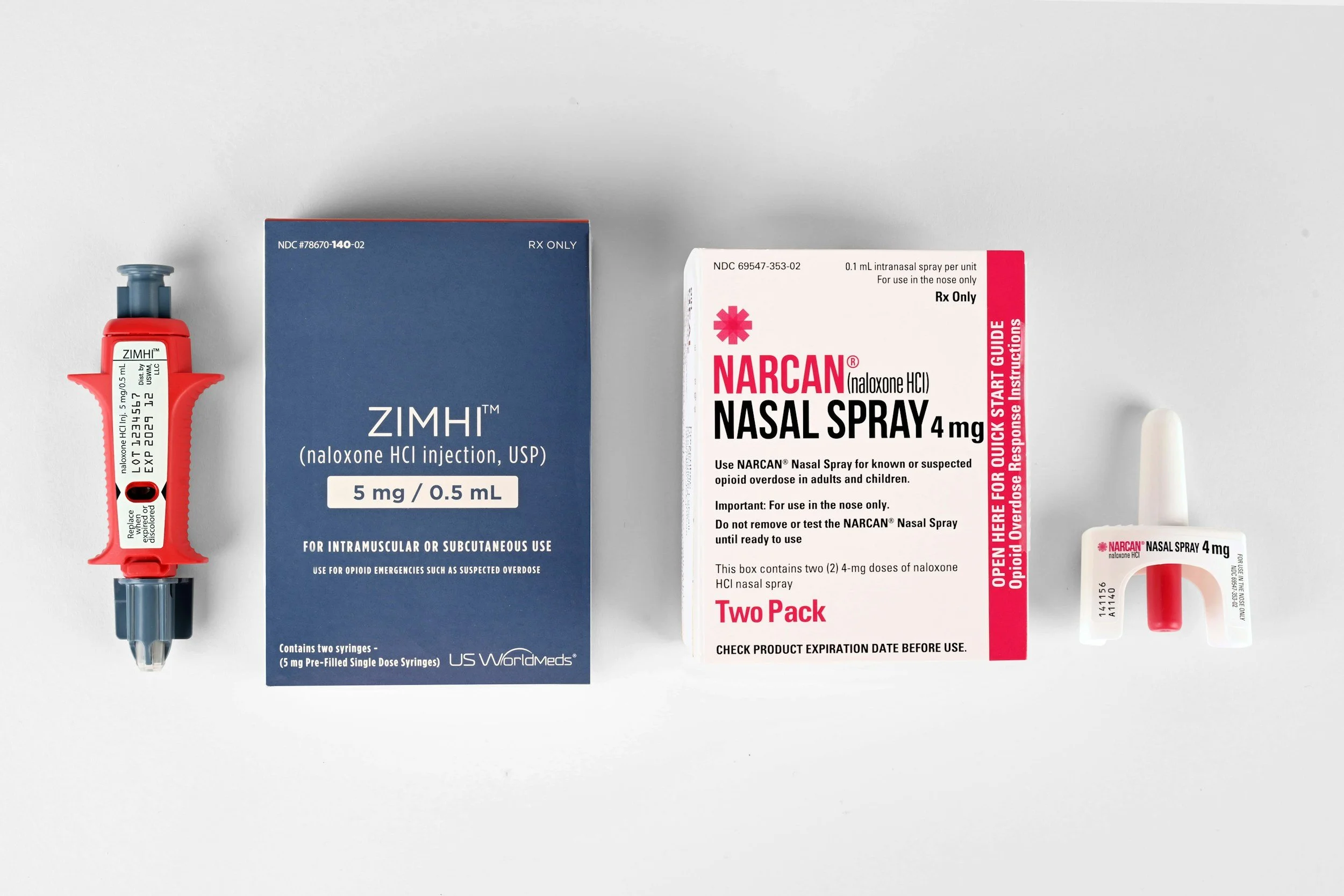
Naloxone saves lives. Everyone should carry it, just as they would carry a first aid kit or know CPR.
What To Do During a Suspected Overdose
If you suspect someone is overdosing:
Call 911 immediately
Administer naloxone
Provide rescue breathing if trained to do so
Begin CPR if necessary
Stay with the individual until emergency services arrive
“Even if the person regains consciousness, emergency medical evaluation is still essential. Naloxone’s effects are temporary, and respiratory depression can return once it wears off.”
What Happens After Narcan?
With a pure opioid overdose:
The person may wake up
Breathing often improves
With an opioid plus medetomidine:
Breathing may improve
The person may remain heavily sedated
The person may not fully awaken (This is one of the clues that something besides opioids may be involved.)
A medetomidine overdose may look like an opioid overdose because opioids are often present. The difference is that the person may remain deeply sedated even after naloxone is administered because naloxone reverses opioids, but it does not reverse medetomidine.

“Not My Child”
The families most caught off guard are often the ones who believed it could never happen to them. Start the conversation early. Keep it honest. Keep it ongoing.
Final Thoughts
Cychlorphine and medetomidine are not the main issue here. What really matters is how quickly the drug landscape keeps changing, often faster than most clinicians, individuals, or parents notice. Raising awareness and educating people are important first steps, but they are not enough to fix the issue. There is always a new substance, a different chemical change, or a new trend coming up, so we need to stay alert and keep learning.
Right now, the most important thing to remember is this: if someone buys a substance on the street, online, or from any unregulated source, there’s no certainty it’s what they think it is.
These risks highlight the importance of compassion and understanding, as many are vulnerable or unaware of what they’re truly facing. We must continue to support efforts that protect and empower individuals while addressing this evolving landscape with care and patience.
I hope you find this information helpful. However, I must also mention that the advice given is for informational purposes only. It is not intended to diagnose or treat any condition. I always recommend consulting a licensed professional in their field of expertise.
If you believe this article will benefit someone else, please share it and email me if you have a topic you would like me to address. The email address is linked above.
If you found this topic interesting, you may want to explore one of the following blog articles.
Resources:
DEA Fact Sheet. https://www.dea.gov/press-releases/2026/05/12/public-safety-advisory
Increase in Fatal Overdoses Linked to Novel Synthetic Opioid N-Propionitrile Chlorphine (Cychlorphine). https://www.cfsre.org/images/content/reports/public_alerts/Public_Alert_N-Propionitrile_Chlorphine_013026.pdf
Cychlorphine: A New Synthetic Opioid 10X Stronger than Fentanyl https://www.holonhealth.com/cychlorphine-a-new-synthetic-opioid-10x-stronger-than-fentanyl/
Disclainer
The content on this website is for informational and educational purposes only. It reflects my personal and professional experience as a licensed social worker, but is not a substitute for therapy, counseling, or professional mental health treatment.
If you are struggling or need individualized support, please seek help from a qualified mental health professional. If you are in crisis or concerned for your safety, call or text 988 in the U.S. to reach the Suicide and Crisis Lifeline, or contact your local emergency services.
About the Author
Janice V. Johnson Dowd, LMSW, is a speaker, writer, and family recovery specialist. She is the author of Rebuilding Relationships in Recovery(North Atlantic Books), a guide for families seeking connection, trust, and healing after addiction. Learn more at janice